A gut-wrenching, soul-crushing, yet captivatingly beautiful story of WWII from the point of view of a French woman living in the French countryside with her husband and young daughter.
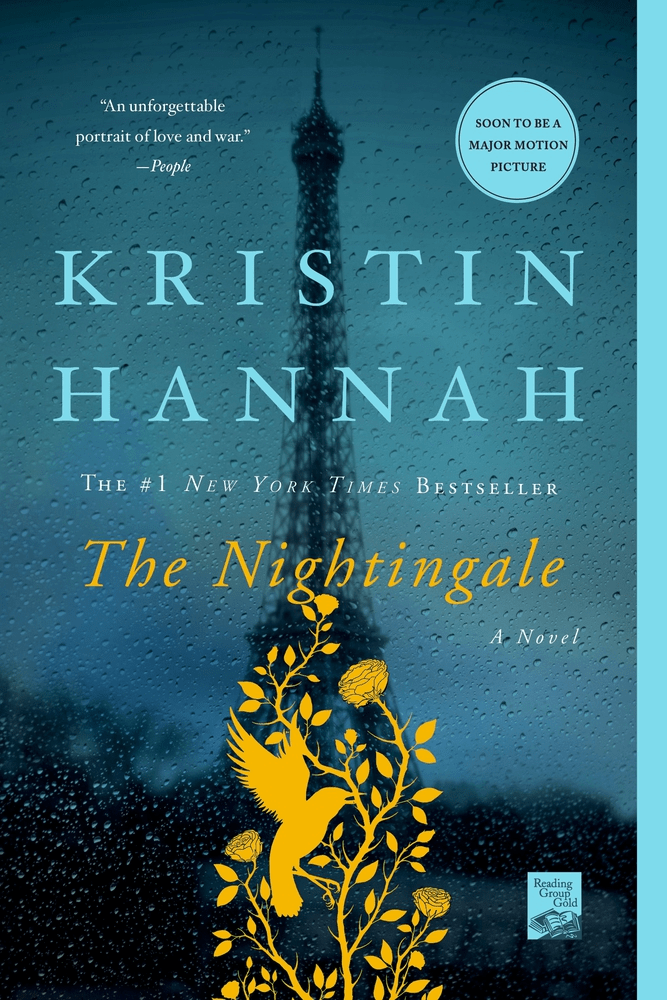
My rating: 5/5 stars
In this nearly 600-page book, we are transported through the turbulent years of 1940 to 1945 — from the moment German forces invade France to the final, hard-won triumph of the Allies. It captures not just the arc of a war, but the slow-burning resistance, the personal sacrifices, and the quiet moments of courage that ultimately lead to liberation and vindication for France and countless other nations.
To start, I cannot express enough how deeply I felt every emotion – denial, fear, desperation, and relief to name a few, while reading this book. There was a huge difference in what I learned about WW2 and the persecution of the Jewish population through history books in school and actually living it through the first-person perspective of the main female character, Vianne Mauriac.
Vianne’s best friend, and next-door neighbor in Carriveau, France is a Jewish woman named Rachel, who lives with her husband and two young children. Vianne has a younger sister, Isabelle who is strong-willed, tough, and very determined to make a difference in the world with her life – quite the opposite of Vianne who doesn’t like to rock the boat.
Their story begins with loss. They lost their mother to consumption at a young age — a tragedy that left a void too large for their father to fill. Once a loving and attentive parent, he returned from the horrors of WWI a changed man, hollowed by trauma and unable to piece himself back together. After their mother’s death, he no longer had the emotional strength, or the will, to care for his children. Instead, he sent them away to be raised by a cold, authoritarian woman, a far cry from the warmth and comfort they had once known.
Vianne fell in love and married early on in her teenage years to escape her troubled life and eventually abandoned her little sister — only 4 at the time, after coping with the grief of a miscarriage.
At the start of the book, most men, including the husbands of Vianne and Rachel were drafted to the war having no choice but to leave behind their women to care for their children alone. Isabelle, having been kicked out of another boarding school for bad behavior, leaves Paris and heads to Carriveau in the countryside to stay with Vianne and Vianne’s young daughter – Sophie.
What absolutely blew me away was the slow infiltration of the German’s agenda. For me, when learning about WWII and The Holocaust, I always thought the question: “How did people allow this to happen?”. In this book, it was clear as day to me how it was done. It was a psychological strategy against the people – to get them comfortable with the slow isolation of the Jews, instilling fear in standing up for what was right at the cost of you or your family being starved or killed.
They had to live off of ration cards and wait in lines for hours to get the remaining food scraps left that the German soldiers didn’t take for themselves. After taking the good meats (steak, chicken, pork, etc.), the French were left with things like pigeon to feed their families, or worse. When the food ran out, it was out. Some were left with nothing at all.
It begins quietly — with the invasion, the forced submission, and the gradual tightening of control over the country. German soldiers arrive not as a sudden flood, but as a steady trickle, billeting themselves in the homes of civilians, imposing their presence like shadows creeping across the walls of everyday life.
At first, it’s just paperwork — or so they claim. They ask for names, lists, records. “Clerical work,” they say. “Nothing to worry about.” But beneath the surface, something far more sinister is taking root.
Then comes the slow, deliberate unraveling of normalcy. Jewish citizens are dismissed from their jobs without warning. Shops begin to display hateful propaganda in their windows. The lines at markets become another quiet form of exclusion. Jewish families are forced to wait until the end of the day, left to scavenge from whatever scraps remain —mostly nothing.
And then, the roundup. The moment when the quiet dread explodes into heartbreaking reality. Experiencing this through a first-person lens made it all the more devastating. These weren’t strangers — they were cherished neighbors, long-time friends, threads in the fabric of their communities. Mothers. Innocent children. Babies. Lives marked not by anything they did, but by who they were.
Vianne and Isabelle have to do what they can to survive and protect the ones they love, all while finding their own ways to fight back against the enemy. It’s a jarring story of life and death, absolute tragedy, and pulling strength out of places you didn’t know existed.
By the end of the book, I was sobbing uncontrollably. I was up all-night thinking about what these people went through — Jewish and Non-Jewish. This book was so beautifully written, that it puts you directly into the eyes of someone living through these dark times and you can feel everything.
I have already loaned my book out to a friend and will continue to shout it from the rooftops that this book was phenomenal and is absolutely worth reading. It will be great addition to your book collection.
Xo Gabrielle
 The Book Nook by Gabrielle
Leave a comment